The Backyard Cookout Audit: Keeping Your Dog's Stomach Safe This BBQ Season
The Most Dangerous Guest at Your Cookout Isn't the One You Invited
Every Independence Day weekend, veterinary clinics across the country brace for a familiar surge: dogs presenting with vomiting, drooling, and abdominal discomfort after backyard celebrations. The pattern is so consistent that many emergency hospitals have come to call it cookout season. The culprit is rarely malice. It is a plate left unattended, a child sharing a hot dog, or a guest who insists that one burger patty couldn't possibly hurt.
For a dog's digestive system, a single afternoon of picnic food can represent a dramatic departure from its normal diet. The result is often acute gastritis — an inflammation of the stomach lining that produces nausea, retching, and listlessness. Most cases resolve, but some escalate into something far more serious. Prevention begins with understanding which foods carry which risks.
The Hazard Map: What's on the Table
Greasy proteins. Burgers, ribs, brats, and fried chicken skin are the leading offenders. High-fat scraps can trigger not just simple stomach upset but pancreatitis, a painful inflammation of the pancreas that may require hospitalization. Small dogs are particularly vulnerable; a few strips of fatty trimmings can constitute a significant caloric and lipid load for a ten-pound body.
Corn cobs. The kernels themselves are harmless, but dogs rarely stop there. Swallowed cob chunks are a classic cause of intestinal obstruction, particularly in medium and large breeds. A dog that gobbles a dropped cob and then begins vomiting the next day may be blocked, not merely queasy.
Onions and garlic. Salsas, baked beans, potato salad, and marinades frequently contain Allium-family ingredients, which damage canine red blood cells. The effects are delayed — sometimes by several days — so a dog that seems fine at first may still be in danger. Toxicity risk accumulates with quantity, but no amount is considered safe.
Grapes, raisins, and xylitol. Fruit salads and dessert trays deserve scrutiny. Grapes and raisins can cause acute kidney injury in dogs, and the artificial sweetener xylitol — common in sugar-free puddings, cookies, and even some peanut butters — can provoke life-threatening hypoglycemia.
Bones and skewers. Cooked poultry bones splinter, and metal or wooden skewers can perforate the GI tract if swallowed whole. Both are genuine surgical emergencies.
A Vet-Reviewed Cheat Sheet for Guests
Consider sharing this with anyone attending your gathering:
- Safe in small amounts: plain cooked hamburger (blotted of grease), seedless watermelon without rind, baby carrots, plain green beans, small pieces of apple without core or seeds.
- Never safe: onions, garlic, grapes, raisins, chocolate desserts, anything containing xylitol, cooked bones, alcohol, and heavily seasoned sides.
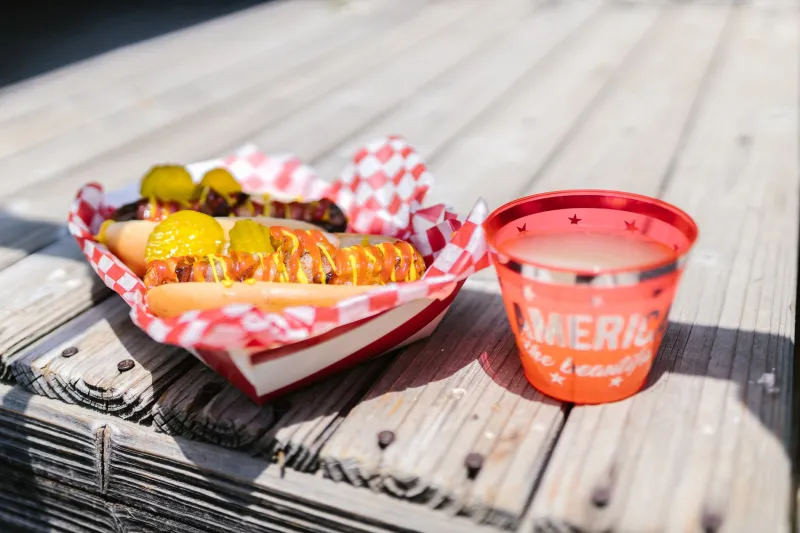
- Conditional: corn (off the cob), plain hot dog fragments — acceptable for some dogs but high in sodium and fat, so best avoided for pets with sensitive stomachs or weight concerns.
Reading the Early Warning Signs
Gastrointestinal distress rarely announces itself all at once. Watch for the quiet signals first: excessive lip-licking, repeated swallowing, a dog retreating under a table, or the telltale hunched posture of nausea. Vomiting, diarrhea, and refusal of water follow as the condition declares itself.
Time matters. A single episode of vomiting in an otherwise bright, alert dog is often manageable at home with a short fast and gradual reintroduction of bland food. Repeated vomiting, a distended or painful abdomen, unproductive retching, blood in the vomit, or lethargy that deepens rather than lifts warrants immediate veterinary attention.
Anti-Nausea Medication or Emergency Visit?
Veterinarians can prescribe anti-nausea medications such as maropitant or ondansetron for dogs with mild-to-moderate stomach upset, and for pets with known sensitivities, some owners keep a prescribed dose on hand for travel or seasonal risk. These medications are genuinely useful — but they are not a substitute for diagnosis.
A reasonable framework: if your dog vomited once after a dietary indiscretion but is now acting normally, drinking water, and staying alert, contact your veterinarian the next morning for guidance. If vomiting persists beyond a few hours, if your dog cannot keep water down, or if you know or suspect the dog ate a corn cob, onion-laden food, grapes, or xylitol, skip the wait-and-see approach and call an emergency clinic. When in doubt, a phone call to a veterinary triage line costs nothing and can spare you both a sleepless night and an unnecessary bill.
Setting Up the Afternoon for Success
A few structural changes make cookout season dramatically safer. Feed your dog a normal meal before guests arrive — a dog with a full stomach is less inclined to beg and scavenge. Assign the grill zone and the buffet table as off-limits, and give your dog a long-lasting chew in a quiet room during peak serving hours. Finally, post a friendly sign on the fence gate: Please don't feed the dog. He has a sensitive stomach. It is usually more effective than asking each guest individually.
Summer should end with fireworks and sunburns, not an overnight stay at the animal hospital. A little planning — and a clear-eyed understanding of what belongs on your dog's plate — keeps it that way.