The Drawer Is Not a Dosing Device: Measuring Liquid Pet Medicine Accurately at Home
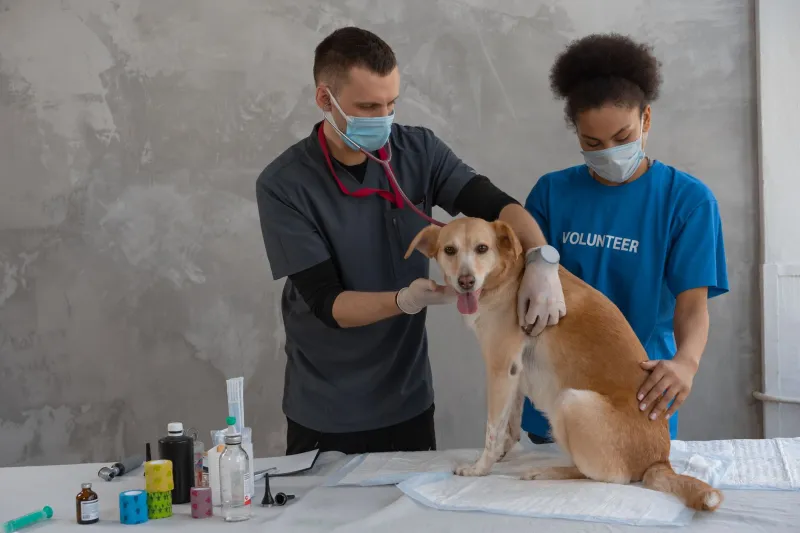
A prescription label for a liquid anti-nausea or anti-inflammatory medication often gives the dose in milliliters. The instruction may look straightforward: draw 1.5 mL and give by mouth. At home, however, the nearest tool is frequently a teaspoon from the kitchen drawer. The substitution feels minor. For a pet, it is not. Household spoons are made for stirring and eating, not for measurement. Their capacities vary, their shapes hold inconsistent volumes, and the hand pouring them adds another layer of error. When the patient weighs eight pounds rather than eighty, that variability can matter.
Why a Spoon from the Drawer Is Not a Teaspoon
In US kitchens, the word teaspoon can refer to two different objects. A true measuring spoon is calibrated so that one teaspoon equals 5 mL. A piece of flatware is not. The spoon you use for coffee may hold noticeably less than the one you use for soup; a rounded bowl, a wide rim, or a shallow profile changes how much liquid it contains when filled to what looks like the same level. A tablespoon from the drawer can be similarly inconsistent, and a partial spoonful is little more than an estimate.
The problem is not only total capacity. It is also how the liquid sits in the spoon. Surface tension creates a meniscus, the curved upper surface of a liquid. In a narrow spoon, that curve may be pronounced; in a wide one, it may be nearly flat. An owner trying to measure 2.5 mL may fill a household half-teaspoon and believe the dose is correct, when the actual volume could be meaningfully higher or lower. For medications that are measured in small increments, that is not a trivial difference.
Small Volumes, Narrow Margins
Pets are not miniature people. A cat or a toy-breed dog may receive a dose of less than a milliliter, and a fraction of a milliliter can represent a substantial percentage of the intended amount. Anti-nausea medications are often adjusted to body weight and clinical response. Anti-inflammatory drugs, including NSAIDs, can have narrow safety margins, which is why veterinarians calculate doses carefully and why owners are asked to follow the label exactly.
Underdosing may leave nausea, vomiting, or pain inadequately controlled. Overdosing may increase the risk of gastrointestinal upset or other adverse effects. The point is not to alarm anyone, but to explain why measurement deserves the same attention as storage, timing, and administration. The veterinary team determines the dose. The owner's responsibility is to deliver that volume faithfully.
The Tools That Belong in the Routine
A calibrated oral syringe is the most practical device for small liquid doses. It is marked in milliliters and is designed to be placed gently into the side of the mouth. A dosing cup can work for larger volumes, provided it is marked clearly and read at eye level. A true measuring spoon is acceptable only when the label is written in teaspoons and the volume is large enough for the spoon's graduations to be meaningful. Even then, a syringe is usually more precise for pets.
Needleless oral syringes are available from many veterinary clinics and pharmacies. Some prescriptions come with an adapter cap that allows the syringe to be drawn directly from the bottle. If your pet's medication did not come with a suitable device, ask the veterinary team or pharmacist before measuring the next dose.
Using an Oral Syringe Correctly
- Read the label and confirm the dose in milliliters. If the label says mL or cc, note that 1 mL equals 1 cc.
- Shake the medication only if the label instructs you to do so.
- Remove the cap and attach any supplied adapter.
- Draw slightly more than the prescribed dose, then tap the syringe to send air bubbles to the top.
- Expel the excess liquid until the plunger reaches the exact mark. Read the syringe at eye level, with the tip pointing upward.
- Place the syringe tip into the side of the pet's mouth, between the cheek and teeth, and administer slowly. Avoid squirting toward the back of the throat.
- Replace the cap, rinse the syringe with warm water if appropriate, and allow it to air-dry.
- Record the time and amount given, especially if more than one person cares for the pet.
If your pet resists the syringe, do not force the medication. Ask the veterinary team about flavoring, a different formulation, or a demonstration of a safer technique. Mixing liquid medication into food is sometimes possible, but only when the veterinarian approves it and the pet reliably eats the entire portion.
A Practical Measurement Checklist
- Confirm that the label is written in milliliters, not household spoonfuls.
- Choose a syringe size that matches the dose. A 1 mL or 3 mL syringe is easier to read accurately for small volumes than a large syringe.
- Check that the markings are sharp and legible. Replace faded syringes.
- Measure over a sink or a washable surface to catch spills.
- Read the volume at the bottom of the plunger or the appropriate graduation, following the manufacturer's instructions.
- Double-check the dose before administering it.
- Keep the measuring device with the medication, not in the kitchen drawer.
- Wash the device after use according to the veterinary team's guidance.
When to Ask for a Better Dosing Device
Ask the veterinary team for help if the label is written only in teaspoons but the dose is small, if the syringe markings are difficult to read, if the dose has changed, if the pet bites or chews the syringe, if multiple caregivers share the responsibility, or if the medication is thick, foamy, or difficult to draw. A brief demonstration in the clinic can prevent repeated errors at home. The team can also mark the correct volume on a syringe, provide an adapter cap, or translate the dose into milliliters in writing.
A kitchen spoon is a familiar object, but familiarity is not accuracy. Liquid medicine for a nauseous or aching pet deserves a calibrated tool and a consistent routine. The few extra seconds required to draw an exact volume protect the veterinarian's work and give the pet the clearest chance at relief. At Anafen Pet Health, we encourage owners to treat measurement as part of the prescription, not as an afterthought.